Waking at night to use the toilet? It is not too much water.
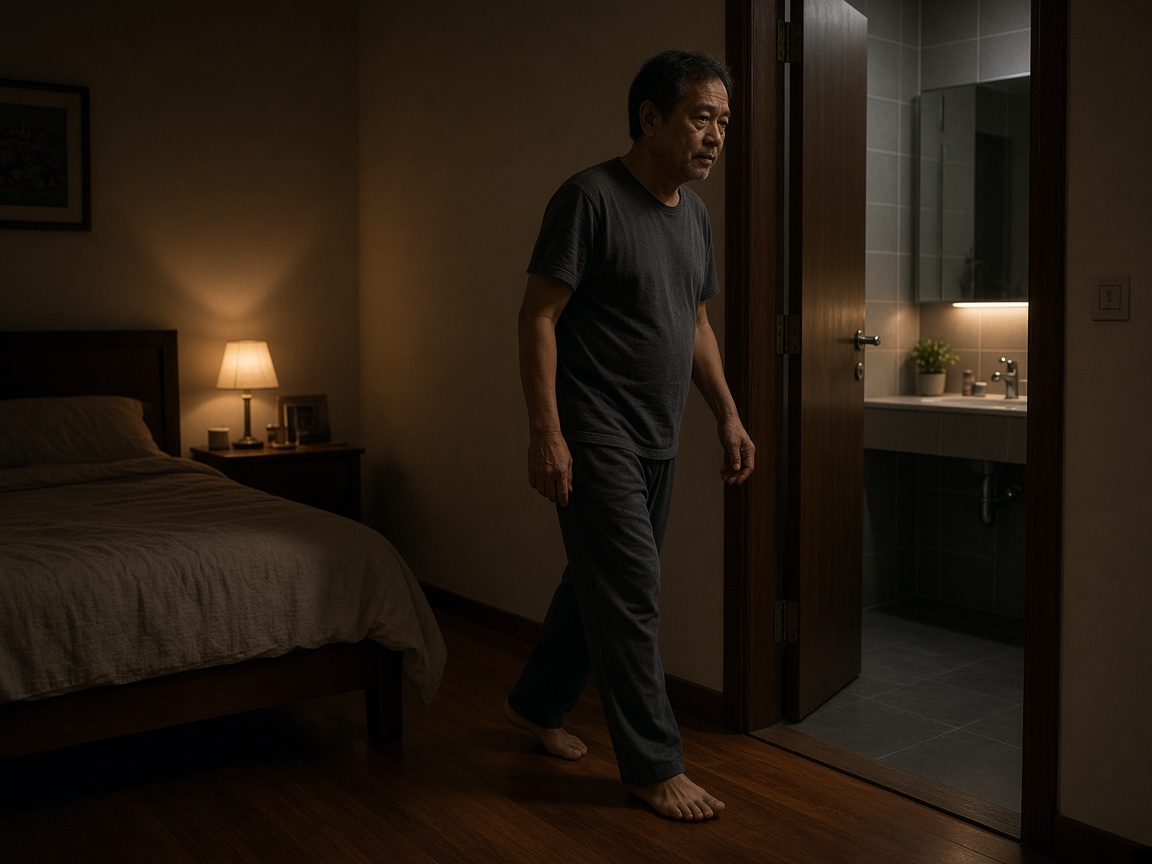
The first thought is always the same: I drank too much. The second: it is age. Both are sometimes partly true, and both hide a mechanism urology guides have described for years. Nocturia — getting up at night to pass urine — is not one symptom of one cause. It is a mix of habits, kidney rhythm and what happens to the bladder after forty.
The kidneys do not switch off at 23:00. If you drink little in the day and catch up in the evening with two glasses and a beer, the body shifts diuresis to the night. That is not too much water overall. It is a bad distribution of fluids. Limit drinks 2–3 hours before bed and move water to the morning and noon.
Caffeine and salt do more than a glass
Kopi after 16:00 works twice: it stimulates and it is a diuretic. The same is true of black tea and cola. Salt from dinner — fried snacks, late tapas, chips with a series — holds water in the tissues. At night, when you lie down, some of that water returns to circulation and fills the bladder. You wake and blame too much water, though in the day you had two cups of kopi and a salty plate.
Evening alcohol deserves its own paragraph. Ethanol suppresses vasopressin, the hormone that should limit urine production at night. A beer with the match at 21:00 is not only fluid volume. It is a signal to the kidneys: work now.
The bladder and the prostate change with age
In many men after 50 the prostate enlarges. That is a common, almost statistical process, not a verdict and not a reason to diagnose yourself online. An enlarged gland can make it harder to empty the bladder fully. Then you get up, pass little, and an hour later you go again. That is not too much water. That is residual urine the bladder did not empty.
Add diabetes, sleep apnoea, blood-pressure tablets taken in the evening, or simply short sleep. The list is long. This text does not end with a prescription. It ends with a week of notes you can take to a doctor.
A week of observation, not panic
- Note the hour of the last kopi, last alcohol and last glass.
- Note how many times you get up and whether the stream is weak or full.
- Move 80% of fluids to 7:00–17:00.
- Cut salt after 18:00 for seven days and see if the nights are quieter.
- If there is blood, fever, side pain, or you cannot pass urine — that is not an essay, that is emergency care.
Pelvic-floor exercises do not repair the kidneys. They help some men with control when coughing and standing up. Herbal tea does not replace a check-up. It can replace a third kopi.
Salt versus water: what really fills the bladder at night
A glass at 21:00 is visible. Salt from dinner is not. Snacks, chips and ready sauces hold water in the tissues all evening. When you lie down, some of it returns to the blood and the kidneys. You wake with a full bladder and cross “hydration” off the list, though you drank too little in the day and ate too salty in the evening.
For seven days do a simple test: 80% of fluids by 17:00, salt after 18:00 only in moderation, no chips with the series. Note the nights. If nothing changes, you have a concrete note for the doctor, not a vague anger at water.
A week without heroics
Monday–Friday: last kopi by 15:00. A bottle on the desk in the morning and at noon, after 17:00 sip sparingly. Dinner: rice or noodles, a vegetable, egg or fish, without a second round of fried snacks. Ten minutes of walking after lunch. Bed at a similar hour.
Weekend: if there is beer, earlier, not until midnight. With beer — seeds or nuts, not a bag of chips. Sunday evening returns to the working rhythm, not “one more episode and tea at 22:00”.
When to see a doctor, not to read further
Book a visit if you get up three times every night for several weeks, the stream has been thin for months, there is prostate cancer in the family, you are over 50, or 45 with risk factors. Immediately — blood, fever, side pain, urinary retention, unexplained weight loss. An essay can organise a week. It cannot look at the prostate.
Content on this site is informational and covers everyday habits and wellness products. It does not replace medical advice. If you have symptoms, see a specialist.